
The Complete Fiber Guide:
Wool vs. Alpaca vs. Cotton vs. Silk (Care, Cost, and Best Uses)
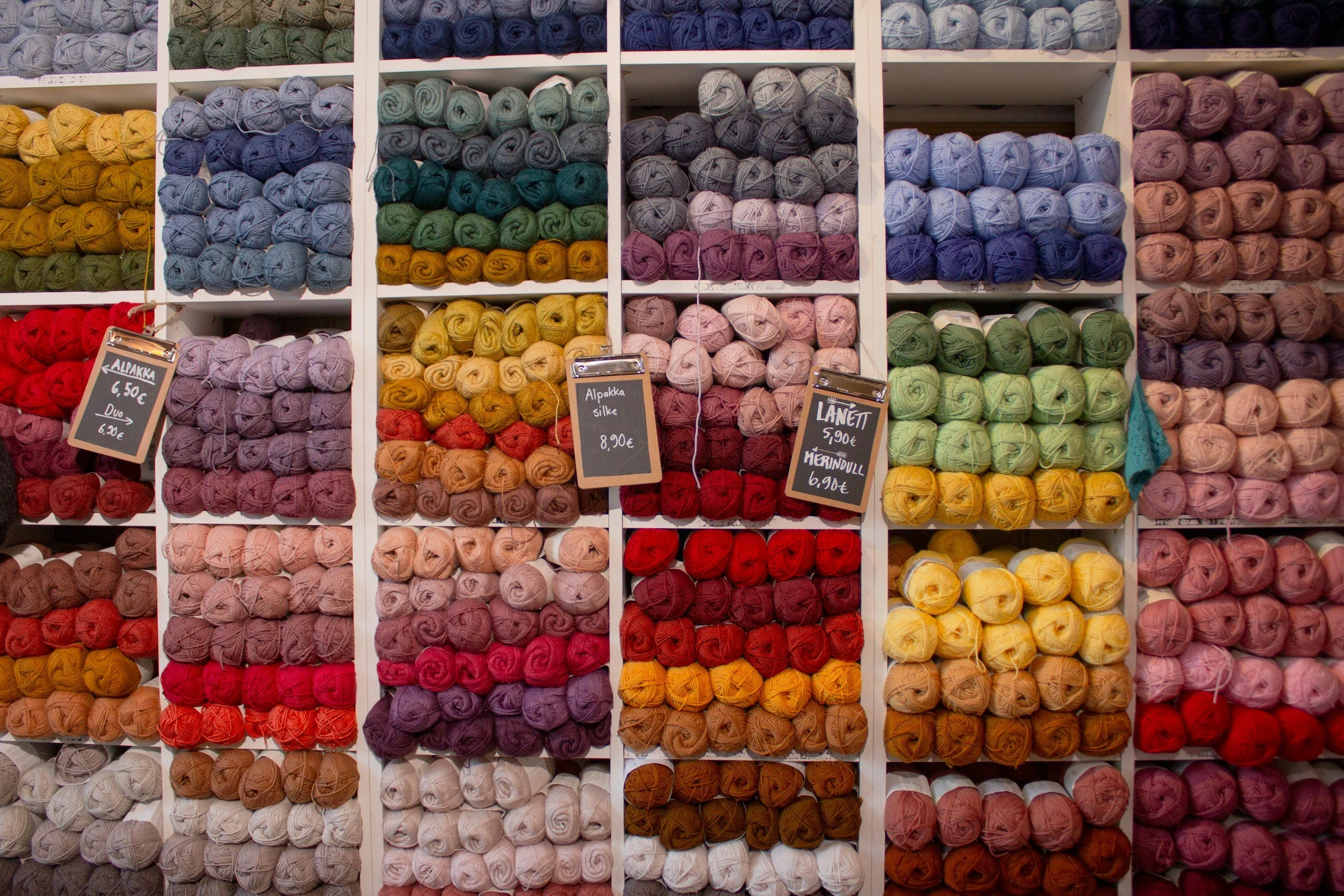
At the Mountain and Valley Fiber Arts Festival, you'll encounter fibers you've never touched. Raw fleece, prepared roving, hand-dyed yarn in mysterious fiber blends. A vendor might hand you something and ask, "What do you think this is?" If you can't tell the difference between wool and alpaca, you'll feel lost.
This guide teaches you to recognize fibers by touch, understand what they're best for, and make purchases you won't regret.
The Fiber Landscape: What Are You Actually Touching?
Fiber comes from four sources:
Animal fiber (sheep, alpaca, goats, rabbits, angora, yak, camel)
Plant fiber (cotton, linen, hemp, bamboo, jute)
Blended fiber (wool + nylon, alpaca + silk, cotton + linen)
Synthetic fiber (acrylic, polyester—rare at fiber festivals, more common in big-box stores)
Fiber festivals emphasize natural fibers because they have story (where the animal lived, how it was raised, who processed it).
WOOL: The Workhorse Fiber
What it is: Hair from sheep. Specific sheep breeds produce different wool types.
Feel: Ranges from rough/itchy (coarse wool) to soft/fluffy (merino, fine wools). Most wool feels slightly "alive"—it has texture and movement.
Best for:
✓ Sweaters, hats, socks, mittens (warm)
✓ Blankets (insulating)
✓ Beginners (forgiving of mistakes)
✗ Babies/sensitive skin unless it's merino or fine wool
✗ Anything requiring precision (yarn softness varies)
Care: Machine wash in cold water, lay flat to dry (never put in dryer). Wool can felt if washed in hot water or agitated too much.
Cost: Budget yarn ($5-8/skein) to high-end ($15-25+/skein)
[infographic]
Festival hint: Ask vendors where the sheep were raised. Durango-area wool has a story.
ALPACA: The Luxury Fiber
What it is: Hair from alpaca animals (South American relatives of llamas). Even more luxurious than wool.
Feel: Incredibly soft, smooth, often silky. Almost no texture—very slippery.
Best for:
✓ Sweaters (warm but not heavy)
✓ Shawls (drapes beautifully)
✓ Scarves (luscious feel)
✗ Socks (too slippery, won't grip to feet)
✗ Amigurumi/stuffed things (fiber slips off stitches)
✗ Beginners (slippery yarn is harder to control)
Care: Hand wash or delicate machine cycle, cold water, lay flat to dry. Do not wring or wring. Alpaca is hardy but slippery.
Cost: Premium ($12-30/skein), often sold in small quantities
Why alpaca is expensive:
Animals produce less fiber per year than sheep
Fiber must be processed separately (doesn't blend easily with plant fibers)
Smaller farmer base (mostly South American or specialty US farms)
Festival hint: Alpaca from Durango-area growers is a big deal. If a vendor emphasizes "local alpaca," that fiber has traveled less and supports regional economy.
COTTON: The Summer Fiber
What it is: Plant fiber from cotton plants. Completely different from animal fiber.
Feel: Smooth, cool, slightly stiff. No elasticity (won't spring back like wool).
Best for:
✓ Summer projects (t-shirts, light sweaters, towels)
✓ Hot climates
✓ Sensitive skin
✓ Dishcloths and washcloths
✗ Stretchy projects (cotton doesn't bounce back)
✗ Warm winter wear (not insulating)
✗ Beginners (less forgiving—mistakes show)
Care: Machine wash and dry. Cotton is hardy. It gets softer with washing.
Cost: Budget-friendly ($4-10/skein), often sold in larger quantities
[infographic]
Festival hint: Cotton from the Southwest is becoming more common. Ask about where it's grown.
LINEN: The Elegant Fiber
What it is: Plant fiber from flax plants. The most durable natural fiber.
Feel: Crisp, structured, cool. Slightly rough when new but softens dramatically with washing.
Best for:
✓ Structured projects (cardigans, bags, structured garments)
✓ Summer wear
✓ Items that improve with age
✗ Curved or stretchy projects (doesn't bend easily)
✗ Projects requiring elasticity
✗ Beginners (shows mistakes clearly)
Care: Machine wash, gets softer with every wash. Wrinkles naturally (that's part of linen's charm).
Cost: Premium ($8-15/skein)
Why linen is special: It's the oldest textile fiber in human history. It gets BETTER with age and washing, becoming softer every time.
Festival hint: Linen availability is rare at festivals. If a vendor has it, they're serious about quality.
SILK: The Luxury Plant Fiber
What it is: Fiber from silkworm cocoons. Rare and expensive.
Feel: Smooth, lustrous, cool. Delicate. Slippery like alpaca.
Best for:
✓ Luxury projects (shawls, wraps, fancy sweaters)
✓ Blended with wool for softness
✗ Everyday wear (too delicate)
✗ Anything getting heavy use (wears quickly)
Care: Hand wash only, cool water, lay flat to dry. Can be damaged by excessive handling.
Cost: Very expensive ($15-40+/skein), usually in small quantities
Festival hint: Silk is rarely sold pure. Look for silk blends instead—wool + silk, alpaca + silk. You get luxury without the fragility.
BLENDS: Smart Shopping
Most festival yarn is NOT pure fiber. It's blended for practical reasons:
Popular Blends and Why They Exist:
[infographic]
Why blends matter:
A pure alpaca yarn is too slippery for socks (blending with nylon fixes this)
Pure wool can be itchy; adding silk or merino softens it
Cotton alone doesn't stretch; adding linen adds structure
Blends are NOT "lesser"—they're engineered for specific purposes
Smart question to ask vendors: "What's in this blend and why?" Good vendors have thoughtful answers about why they blended specific fibers.
Understanding Yarn Labels: The Secret Code
When you pick up yarn at the festival, the label tells you everything you need to know. Learn to read it:
Fiber Content (listed by percentage)
"100% Merino Wool" = pure fiber
"80% Wool / 20% Nylon" = mostly wool, some nylon for durability
Always listed by percentage, highest first
Weight (how thick the yarn is)
Lace, fingering, sport, DK, worsted, bulky, super bulky
Heavier weight = thicker yarn = faster projects
Lighter weight = thinner yarn = more yardage per skein
Yardage (how far the yarn will go)
Usually listed per skein or per 100 grams
More yardage = more project potential
Important for calculating if you have enough for your project
Care Instructions (washing/drying)
Hand wash, machine wash, dry clean, lay flat, hang dry
This is NON-NEGOTIABLE—respect the fiber's needs
Origin (where fiber came from)
"Milled in Peru," "Grown in Australia," "Dyed locally"
Festival yarn often includes this—it's part of the story
The Touch Test: How to Know What You're Getting
At the festival, you'll touch fibers before buying. Here's what to notice:
Wool
Feels slightly textured, never slippery
Bounces back when you squeeze it
Warm to the touch
May have slight "scratchiness" (coarser breeds) or none (merino)
Alpaca
Impossibly soft and smooth
Very slippery—will slide through your fingers
Cool to the touch
Lightweight despite warmth
Cotton
Cool and smooth, slightly stiff
No bounce—stays compressed when squeezed
Gets softer the more you handle it
No fuzzy halo
Linen
Crisp and structured
Cool and dry-feeling
Slightly rough when new
Gets softer with every wash
Silk
Silky (duh) and slippery
Lustrous sheen visible even in a skein
Cool and delicate-feeling
Rare to find pure at festivals
Blends
Combination of characteristics
Wool + alpaca = bouncy but slippery
Cotton + linen = structured but slightly rough
Ask the vendor what you're feeling
Festival Fiber Shopping Strategy
Before You Buy:
Know your project. Are you making a sweater (need stretch), a summer top (need breathability), or a gift (need durability)? Pick your fiber based on the project, not just the color.
Calculate yardage needed. Check your pattern. Bring the yardage requirement written down. Festival math is hard when you're excited.
Check care requirements. Does this fiber need hand-washing? Can you commit to that? (Be honest.)
Ask about regional sourcing. "Where did this fiber come from?" is a beautiful festival question. Support local when possible.
Touch everything twice. Your first impression matters, but so does your second. If you're still drawn to it after touching three other yarns, it's a keeper.
Common Fiber Mistakes Beginners Make (And How to Avoid Them)
Mistake 1: Buying luxury fiber for your first project
You're excited. You see beautiful hand-dyed alpaca. You buy 8 skeins. Then you realize alpaca is slippery and your stitches are uneven and the finished sweater is... weird.
Solution: Save luxury fiber for when you know your tension. Start with wool blends.
Mistake 2: Buying too much of one color
You love this shade of blue. You buy 5 skeins. Then you realize you need a different blue for the pattern. Now you have blue yarn you can't use.
Solution: Buy one skein. Test it. Buy more if you love it.
Mistake 3: Ignoring care instructions
You buy gorgeous cashmere blend. The label says "dry clean only." You put it in the washing machine. Disaster.
Solution: LOOK AT THE LABEL. Seriously. Do this before you buy.
Mistake 4: Buying based on festival price instead of project need
It's on sale! Buy it! You'll use it eventually! (You won't.)
Solution: Only buy fiber for a project you actually plan to make in the next 6 months.
Mistake 5: Underestimating how much fiber you need
The pattern calls for 1200 yards. The skein is 400 yards. You assume you'll find the same yarn later. (You won't.)
Solution: Buy extra. Dye lots change. Vendors run out. Get what you need plus one extra skein.
After the Festival: Storing Your Fiber Treasures
You brought home beautiful materials. Now keep them beautiful:
Storage for Yarn:
Keep in a cool, dry place
Use clear storage containers so you can see what you have
Cedar blocks prevent moths (works better than mothballs)
Keep labels with the yarn so you remember fiber content/yardage
Storage for Spinning Fiber:
Keep in sealed containers (protects from dust and moths)
Separate by fiber type (wool absorbs oils and odors)
Label everything with fiber type and date purchased
Store away from light (fading is real)
Storage for Raw Fleece:
Keep very dry (moisture = disaster)
Sealed containers are essential
Store in cool place
Check periodically for moth